

Genealogical Research
Comprehensive research in Italian archives: town hall civil registers, parish books, diocesan archives and the State Archives.
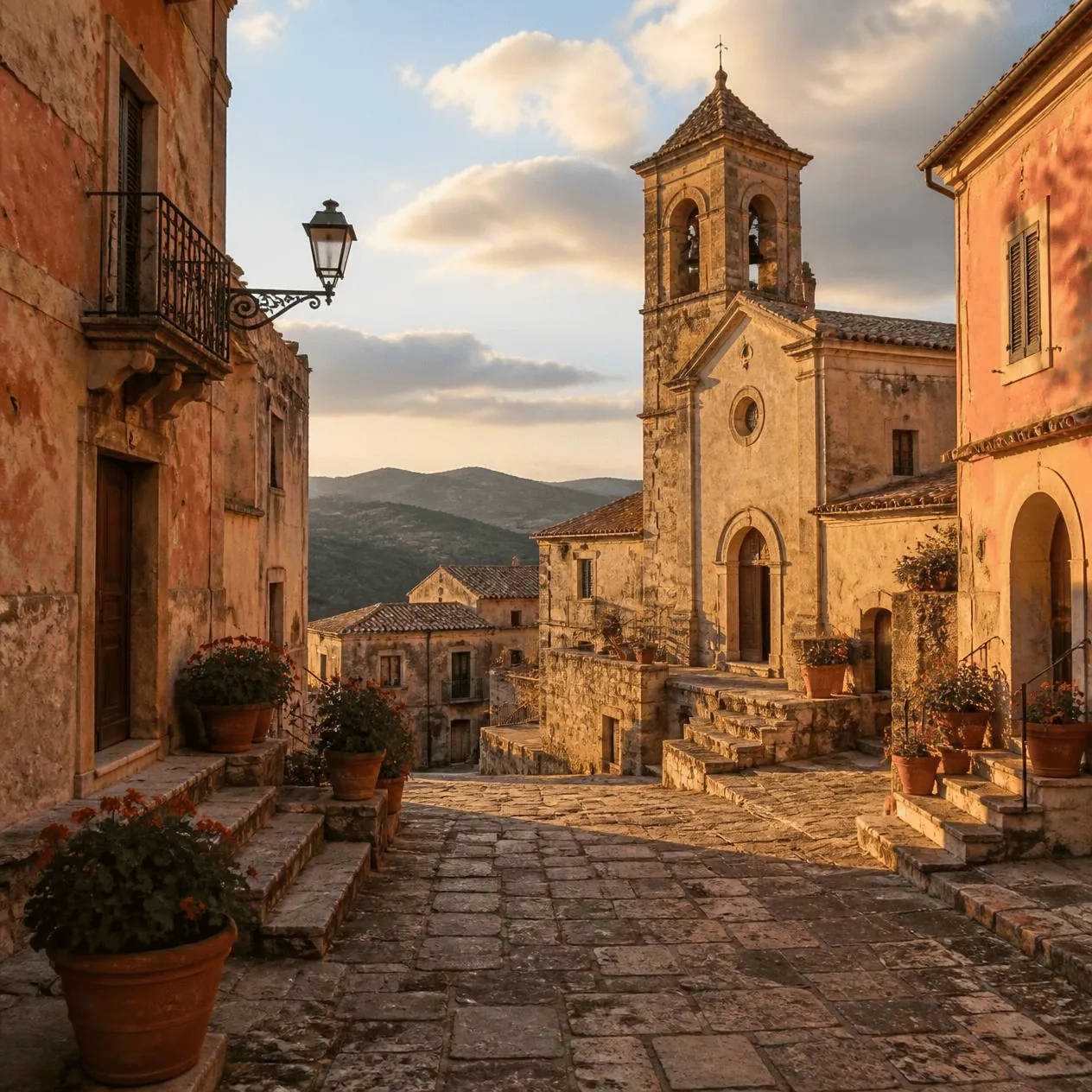
Every family name has a story. Yours begins here.
If your grandparents or great-grandparents left Italy for America, we help you rediscover the village where your family story began — first in its town hall and parish registers, then on its streets.
Licensed tour operator N° 271, based in Naples and Rome since 2013

Somewhere in Italy there is a baptism record with your great-grandfather’s name on it, written by the parish priest of his village. There is a birth act at the town hall, drawn up by a clerk and signed by two witnesses. Often the street named in those records is still there.
We combine professional genealogy research with unforgettable travel experiences across Italy. We read the registers, build your family tree from what they prove and, when you are ready, take you to the places they describe.
Run by Solo Services s.r.l., a licensed tour operator based in Naples and Rome since 2013.

Four steps, in this order. Each one builds on what the previous one found.
We start with your surname, the names of your ancestors and the information you already have: dates, a town name, letters, naturalization papers, an old photograph with a studio stamp.
We consult civil and parish registers — births, baptisms, marriages and deaths — together with draft lists and emigration records, online and in person.
You receive a detailed reconstruction of your family history, with each person linked to the record that documents them.
When you are ready, we organize a private Heritage Journey to the land of your ancestors.
Research and travel, from the same team: what the archives find, we can show you in person.
Comprehensive research in Italian archives: town hall civil registers, parish books, diocesan archives and the State Archives.
Your family tree with verified documentation: every name, date and place tied to the record it comes from.
Birth, marriage and death certificates located in the right town and requested from the office that holds them.
Private tours to your ancestral town with luxury services: car and minivan transfers, bilingual guides and hotel reservations.
Our offices are in Naples and Rome, and we have organized tours across southern Italy since 2013. We know the roads to small towns and how their offices work.
Much of the civil record is online on the Portale Antenati; most parish books are not. We consult them where they are kept, in the parish or the diocesan archive.
Tailor-made trips to your ancestral village, with private transfers, bilingual guides and time to stand where your family’s story began.

Italian genealogy rests on two sets of books. Parish priests have recorded baptisms and marriages since the Council of Trent closed in 1563, and burials since the Roman Ritual of 1614. Civil registration arrived with the French: in the Kingdom of Naples it began in January 1809, in Sicily only in 1820, and in the south it has continued without a break ever since.
Much of the civil record is now online on the Portale Antenati of Italy’s Directorate General for Archives. Most parish books are not, and are read on site. Marriage files are often the richest find: they can include the birth extracts of the bride and groom, which carry the tree back another generation.

Leaving Italy left records on both sides of the ocean. An emigrant needed a passport for travel abroad, and passport records survive in a number of Italian archives. The ship’s passenger list noted name, age and place of origin, and often the relative waiting in America.
Before Ellis Island opened, New York arrivals were processed at Castle Garden in Lower Manhattan. From January 1, 1892 to November 12, 1954, the federal station on Ellis Island processed more than 12 million immigrants. Whatever you know about the American end — a port, a year, a ship — helps us find the Italian beginning.

Give me your tired, your poor,
Emma Lazarus — The New Colossus, 1883
Your huddled masses yearning to breathe free…
I lift my lamp beside the golden door!
Written for the Statue of Liberty’s pedestal fund, the sonnet was placed on a plaque inside the pedestal in 1903.

Imagine walking through the very square where your great-grandparents lived. Once the records point to a town, we plan a private journey there, at your pace: a car waiting at the airport or your hotel, a bilingual assistant at your side, and a local guide who knows the streets.
We organize private experiences that include:

In a village parish the baptism book is often the oldest written trace of a family — older than any civil register, which in the south begins in 1809. In many towns the old books are still kept in the parish; in others they have moved to the diocesan archive.
On a Heritage Journey we arrange the visit with the parish in advance, so you can see the church where your ancestors were baptized and married. At the town hall, the civil registry office keeps the town’s own copies of the acts of birth, marriage and death.

Some families find cousins who still carry the same surname, a few streets from the house named in the records. When relatives are still living in the area and are glad to meet, we help arrange it: the first contact, the introductions, an interpreter at the table.
It is not always possible, and we never promise it. When it happens, it usually happens over a long traditional lunch, with photographs passed from hand to hand. If you would like the day remembered, a professional photographer can come along.
An initial consultation can be the first step toward rediscovering a story that has remained hidden for generations. Fill in what you have — a surname is enough to start.
The form opens WhatsApp with your details already written, addressed to +39 320 306 3365. Nothing is sent until you press send.
Prefer email? Write to info@toursshared.com
Or call +39 320 306 3365
No two searches are alike. These are the points families ask about first.
The family surname, your ancestors’ names, approximate dates, the town or province if you know it, and copies of any documents you already have.
Civil and parish registers, draft lists and military records, passport and emigration records, in Italian archives online and on site.
A detailed reconstruction of your family history and a family tree with verified documentation, together with the certificates we locate.
Assistance in English, Italian and Spanish, from the first consultation to the journey.
Private and on request: luxury car or minivan transfers, bilingual guides, hotel reservations, visits to the town hall and the parish.
It depends on the town, the period and how the records have survived. We discuss it with you after the initial consultation.
Start with everything you have: the surname, your ancestors’ names, approximate dates and any documents at home, such as naturalization papers, a passenger list or old letters. The key is the town of origin, because Italian records are kept town by town. If you don’t know it yet, finding it is the first step of our research.
Civil registers of births, marriages and deaths, which in the former Kingdom of Naples begin in 1809 and in Sicily in 1820; parish registers of baptisms and marriages kept since the Council of Trent (1563) and of burials since 1614; draft lists, military records and emigration records. We use the Portale Antenati and consult local archives in person.
No. Records have survived unevenly: some registers were damaged or lost, some names were written in different spellings, and some families moved from town to town. We tell you clearly what we find, what each record proves and where the trail stops.
We provide documented genealogical research and certificate search; we do not handle citizenship applications or assess eligibility. Italy restricted citizenship by descent in 2025, so for questions about eligibility please contact an Italian consulate or a qualified lawyer.
A private journey to your ancestral town with luxury car or minivan transfers, bilingual assistants and guides, a visit to the town hall and to the church where your ancestors were baptized, a traditional local lunch and hotel reservations. A professional photographer is optional, and we arrange a meeting with relatives still living in the area when possible.
Fill in the consultation form on this page: it opens WhatsApp with your details already written, addressed to +39 320 306 3365. You can also write to info@toursshared.com. We assist you in English, Italian and Spanish.

Tell us the surname and whatever you remember. We will tell you clearly what the archives can show, and how we can take you to the place where it all began.
Main website: toursshared.com
Naples office: +39 081 593 42 20 · Email: info@toursshared.com
Most Italian-American families descend from emigrants who crossed the Atlantic in the decades around 1900, and most of them came from the south: Campania, Calabria, Sicily, Basilicata, Abruzzo, Molise and Apulia. They left villages where every family was written into the same few registers, and many never went back.
For many families the name of the town was lost along the way, never written down in America or remembered only as it sounded. Finding it again is usually the hardest step of the research. Once it is found, the town’s registers can often take the family back several generations, and the town itself is a journey away.